
- Your cart is empty Browse Shop
Migration to Australia
Migration to Australia – A Skilled Migrant’s Guide
Australia remains one of the most attractive destinations for professionals around the world seeking a high-quality life, stable career growth, and permanent residency opportunities. For many bright and ambitious individuals, migrating under a skilled visa can be a life-changing decision — offering work flexibility, social benefits, and long-term settlement potential.
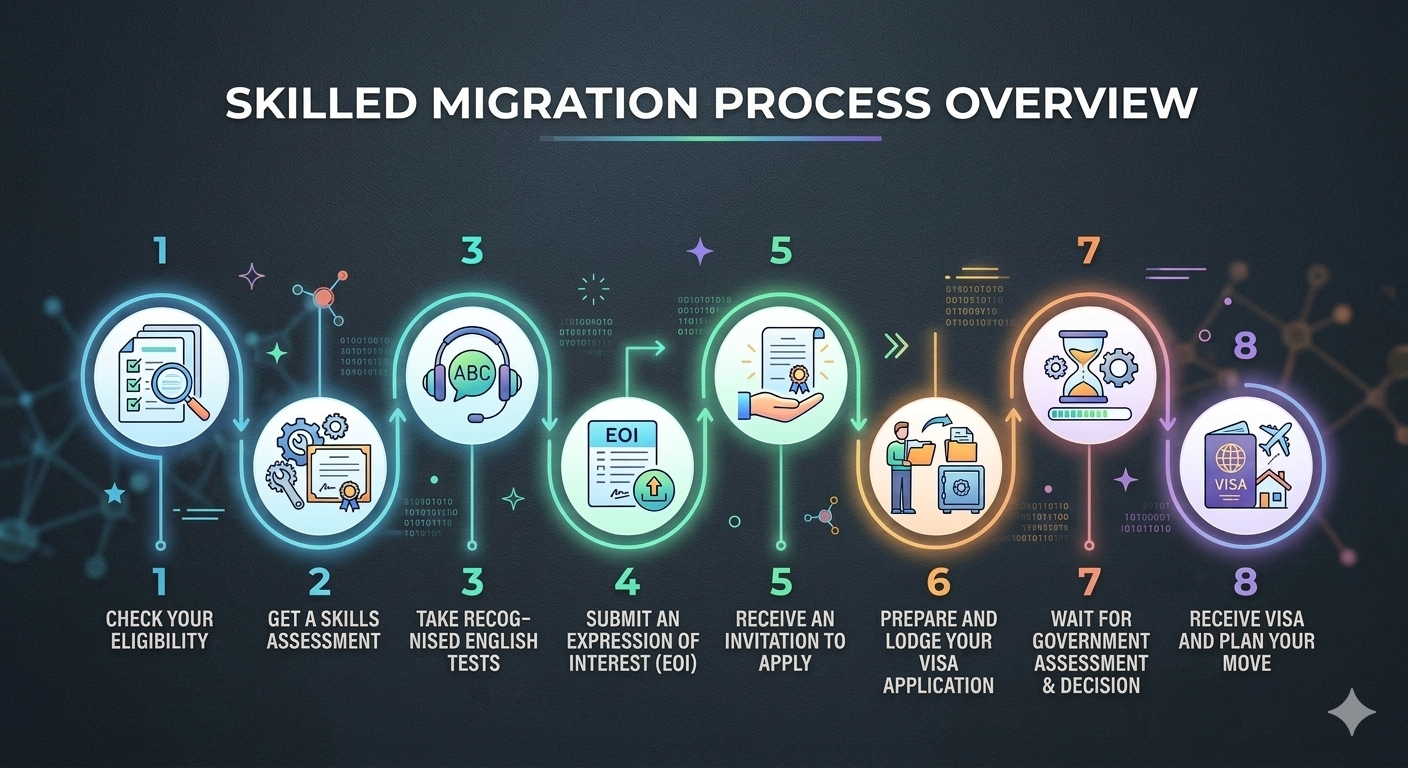
This guide gives you a step-by-step understanding of how skilled migration works, what it involves, and how you can begin your journey with confidence.
Expert guidance to assess your profile and identify the right study abroad options.
Why Collaborate with ECAINE?

Certified & Awarded Programme
Professional accreditation for education counsellors.
Why Choose Skilled Migration to Australia?
Australia’s economy constantly evolves, and the government actively seeks professionals who can fill skill gaps and strengthen the labour market. Skilled migration is not just about moving — it’s about contributing economically and becoming part of Australian society.
The country places a strong emphasis on:
-
High-quality education and recognised qualifications -
Innovation, technology, and industry growth -
Work-life balance and supportive community environment
These features make Australia a popular destination for professionals and families alike.
What Is Skilled Migration?
Skilled migration refers to visa pathways designed for people who have:
-
Relevant qualifications and work experience -
Skills that are in demand in Australia -
The ability to meet minimum points and English requirements
Unlike employer-sponsored visas, many skilled visas allow you to apply independently or with state sponsorship, giving you flexibility and choice.
Two key streams under skilled migration include:
Skilled Independent Visa (Subclass 189)
The Skilled Independent Visa (subclass 189) is one of the most sought-after pathways for professionals who do not require employer sponsorship.
It allows you to:
-
Live and work anywhere in Australia -
Study and access social services -
Sponsor eligible family members -
Apply for citizenship (if eligible)
This visa is points-tested and requires:
- Your occupation to be on the Skilled Occupation List
- A positive skills assessment in your chosen field
- A minimum number of points based on age, education, work experience, English proficiency, etc.
- An invitation to apply from the Department of Home Affairs Immigration and citizenship Website
Skilled Work Regional Visa (Subclass 491)
For professionals willing to live and work in regional areas of Australia, the Subclass 491 visa can provide an excellent route.
Key benefits include:
-
Work and live in designated regional zones
A potential pathway to permanent residence after meeting conditions
Requirements typically include:
-
A valid skills assessment -
Being nominated by a state government or sponsored by an eligible relative -
Meeting minimum points and English language standards Immigration and citizenship Website
Regional Australia offers great opportunities in sectors such as healthcare, engineering, IT, education, agriculture, and trades — making it ideal for skilled workers ready to explore beyond major cities.
Skills Must Be Recognised

Before applying, one of the first crucial steps is getting an official skills assessment from an Australian assessing authority relevant to your profession. Your skills, education, and work experience are evaluated against Australian standards so that they can match you with suitable visa categories.
Australia maintains a Skilled Occupation List (SOL) that includes occupations in demand — from engineers, accountants, IT professionals, and healthcare practitioners to a range of specialised technical roles. Your job must be on this list to be eligible for skilled migration pathways. IDP

Language and Points
English language ability is a core requirement. You must demonstrate competency through recognised language tests and achieve scores that contribute to your migration points. Points are awarded based on:
-
Age -
English proficiency -
Work experience (local and overseas) -
Educational qualifications -
Other factors like regional nomination -
Other factors like regional nomination
The higher your score, the stronger your chance of receiving an invitation to apply. Skilled migration generally requires competitive planning and preparation.
State & Territory Nomination
Besides independent skilled visas, many states and territories offer nomination sponsorship for applicants whose skills match local labour market needs.
Nomination boosts your points and can greatly increase your chances of a successful application.
Each state often has its own priority occupation lists and criteria, which can change based on local workforce demands. This makes careful planning and guidance even more important.
Frequently Asked Questions (FAQ)
1. What is skilled migration to Australia?
Skilled migration is a pathway for professionals with recognised qualifications and work experience to live and work in Australia. It is designed to address skill shortages in the Australian labour market and allows eligible applicants to apply for permanent or provisional visas based on their skills rather than family or employer sponsorship alone.
2. Do I need a job offer to apply for skilled migration?
Not always. Many skilled visas allow applicants to apply without a job offer, provided they meet eligibility requirements and receive an invitation from the Australian government. Some pathways also offer state or regional nomination, which can strengthen an application.
3. How do I know if my occupation is eligible?
Your occupation must appear on Australia’s Skilled Occupation List, which is updated periodically based on labour market needs. Each occupation is assessed by a specific Australian authority to ensure your qualifications and experience meet local standards.
4. What is a skills assessment and why is it important?
A skills assessment is an official evaluation conducted by an Australian assessing authority relevant to your profession. It confirms whether your education and work experience match Australian standards. A positive skills assessment is mandatory for most skilled migration visas.
5. Is English language proficiency mandatory?
Yes. English language ability is a core requirement for skilled migration. Applicants must demonstrate their proficiency through recognised English tests. Higher English scores can significantly improve your migration points and overall application strength.
6. How does the points system work?
Australia uses a points-based system to rank skilled migration applicants. Points are awarded for factors such as:
- Age
- English language proficiency
- Educational qualifications
- Skilled work experience
- State or regional nomination
Meeting the minimum points threshold does not guarantee an invitation, as selection is competitive.
7. What is state or regional nomination?
State and regional nomination is when an Australian state or territory supports your skilled visa application based on local workforce needs. Nomination can increase your points and improve your chances of receiving an invitation, especially if you are open to living outside major cities.
8. Can skilled migration lead to permanent residence?
Yes. Many skilled visas are either permanent visas or provide a clear pathway to permanent residence, subject to meeting specific conditions such as work duration, income requirements, and regional residence obligations.
9. Can I include my family in my application?
In most cases, yes. Skilled migration visas often allow you to include eligible family members, such as a spouse and dependent children. Family members may also have work and study rights in Australia.
10. How long does the skilled migration process take?
Processing time varies depending on the visa type, your occupation, the accuracy of documents, and government priorities. Skilled migration is a step-by-step process, and careful preparation can help avoid unnecessary delays.
11. Is skilled migration guaranteed once I apply?
No. Skilled migration is competitive, and meeting eligibility criteria does not automatically guarantee a visa. Invitations are issued based on ranking, demand for occupations, and government policy at the time of selection.
12. Why should I seek professional guidance?
Australian migration rules are detailed and frequently updated. Professional guidance helps ensure:
- Correct visa strategy
- Accurate documentation
- Compliance with current regulations
- Reduced risk of refusal
Expert advice can make the journey clearer, more efficient, and less stressful.
- Image
- SKU
- Rating
- Price
- Stock
- Availability
- Add to cart
- Description
- Content
- Weight
- Dimensions
- Additional information